

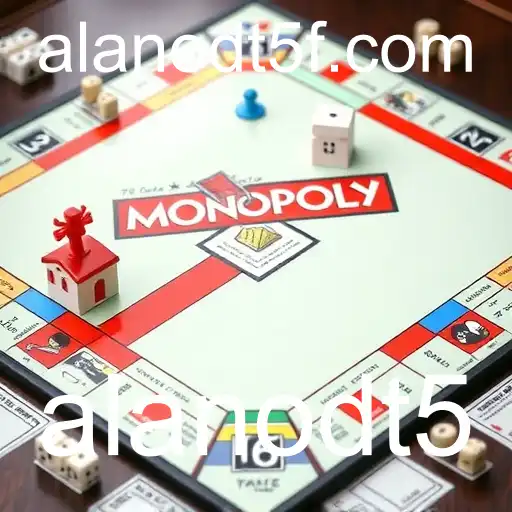
Understanding the Dynamics of Monopoly: A Classic Board Game
The Origins and Evolution of Monopoly
Monopoly, a game that has captured the interest of families and friends for generations, traces its roots back to the early 20th century. Originally designed to illustrate the pitfalls of concentrating land in private monopolies, the game has evolved into a ubiquitous household pastime. Its development reflects changes in economic theories and consumer entertainment. Although the rules of the game have largely remained consistent, variations like Monopoly Empire and digital adaptations have kept it relevant in modern times.
Strategic Elements of Monopoly
At its core, Monopoly is a game of strategy disguised as mere luck. Players roll dice to navigate a board filled with properties, utilities, and special spaces. The goal is to acquire as much wealth as possible, primarily through real estate investments. This seemingly simple premise opens the doors to various strategic considerations that can impact the game's outcome significantly.
One of the most important strategies revolves around property acquisition. Players who secure complete sets, or monopolies, can build houses and hotels to increase rent charges. The choice of which properties to prioritize is a critical decision. Railroads offer moderate return and good mobility, while utility companies provide unexpected income boosts but with higher volatility.
The Art of Negotiation
Negotiation is a crucial aspect of Monopoly and can be a game-changing skill. Successful players often engage in trades that not only benefit themselves but also strategically handicap their opponents. The timing of these negotiations is crucial—trading too early might reveal your plans, while waiting too long might miss opportunities.
A well-timed trade can transform a player’s standing in the game, allowing access to a much-needed property set or financial relief in critical moments. Players often use properties as bargaining chips, leveraging them against others' weaknesses.
Influence of Chance
Despite strategic elements, chance plays an undeniably influential role in Monopoly. The roll of the dice can influence a player's movement across the board, determining whether they land on advantageous spaces. Community Chest and Chance cards introduce elements of unpredictability, sometimes altering the game’s momentum dramatically.
Managing risk is, therefore, another layer of the game’s strategy. Players tailor their approaches to maximize opportunities and mitigate the blows dealt by luck. Understanding probability can assist in making informed decisions regarding property investments and cash flow management.
Advanced Strategies and Tips
Advanced players delve deeper into statistical analysis and psychological tactics. Understanding the statistical probability of landing on certain properties can guide investment decisions more pragmatically. Additionally, assessing opponents' financial states and strategic intent can provide deeper insights and guide tactical decisions.
Cash management is paramount. Maintaining liquidity allows players to navigate through downturns and seize investment opportunities. Reckless spending without securing stable income streams can lead to financial overextension, making bankruptcy a looming threat.
Misconceptions and Clarifications
A common misconception about Monopoly is that it celebrates monopolistic practices, when in reality, it was designed to critique them. Initially conceptualized in 1903 by Elizabeth Magie to demonstrate how land grabs enriched landowners and impoverished tenants, the game's commercial iteration eventually shifted away from this educational intent.
Monopoly in the Digital Age
The advent of technology has ushered Monopoly into the digital age, where video game adaptations and mobile apps offer international opportunities to play with friends and family across distances. These platforms retain fundamental game mechanics while introducing new elements such as custom rule sets and leaderboards, enhancing engagement for modern players.
The Cultural Impact of Monopoly
Monopoly’s influence extends beyond just being a game. It offers glimpses into economic principles, negotiation skills, and strategic foresight, serving as a microcosm of economic behaviors and decision-making. It ignites discussions about ownership, wealth distribution, and economic inequality, making it not only a source of entertainment but also a springboard for socio-economic discussions.
With editions highlighting cities, classical works, and even pop culture, Monopoly continually reflects societal interests and values, maintaining its relevance through generational shifts.
Conclusion
Monopoly remains a fixture in board game collections worldwide, offering both entertainment and educational value. Its combination of chance, strategy, and negotiation offers an engaging experience that continues to challenge players to think critically and plan meticulously.